
Balcony Solar in California: What Bay Area Renters and Homeowners Should Know

What California’s new law changes, and what to check before buying a small plug-in solar system.
For someone who can't put solar on a roof, a small system on a sunny balcony or patio may offer another way to reduce electricity bills.
The idea is appealing for renters, condo owners, and homeowners with limited space. Whether it makes sense depends on the sunlight, the equipment, and how the system can be connected and mounted. Those are the details I would look at before buying a kit.
What balcony solar does
Balcony solar, also called plug-in solar, uses a small number of panels and an inverter designed to supply electricity through a receptacle connection. The inverter converts the panels’ DC electricity into AC electricity used by the home.
During normal operation, that production can reduce the power purchased from the grid. Refrigerators, internet equipment, and other household loads can use the electricity even when no one is home.
Some systems also include battery storage. What the battery can do depends on the equipment and how it is connected.
What changes in California
Governor Gavin Newsom signed SB 868 on September 30, 2026. Its new utility exemption takes effect January 1, 2027.
For qualifying systems, the law removes utility interconnection approval requirements and related utility fees. A utility may require simple online notification, but cannot turn that notification into an approval process.
The limit is 1,200 watts of combined maximum AC output per dwelling. That is the inverter output limit, rather than the total DC wattage printed on the panels.
To qualify, a system must meet electrical-code requirements, have certification as a plug-in photovoltaic system from UL or an equivalent nationally recognized testing laboratory, and include certified outage isolation.
The exemption is currently set to expire January 1, 2030. It does not provide a blanket local permit exemption or create a new tenant installation right.
Until January 1, 2027, existing utility requirements still apply. Check with PG&E and the local building department about the requirements for a proposed installation.
How much sunlight the panels will get
The panel wattage is only part of the production estimate. Direction, tilt, shading, and local weather also matter.
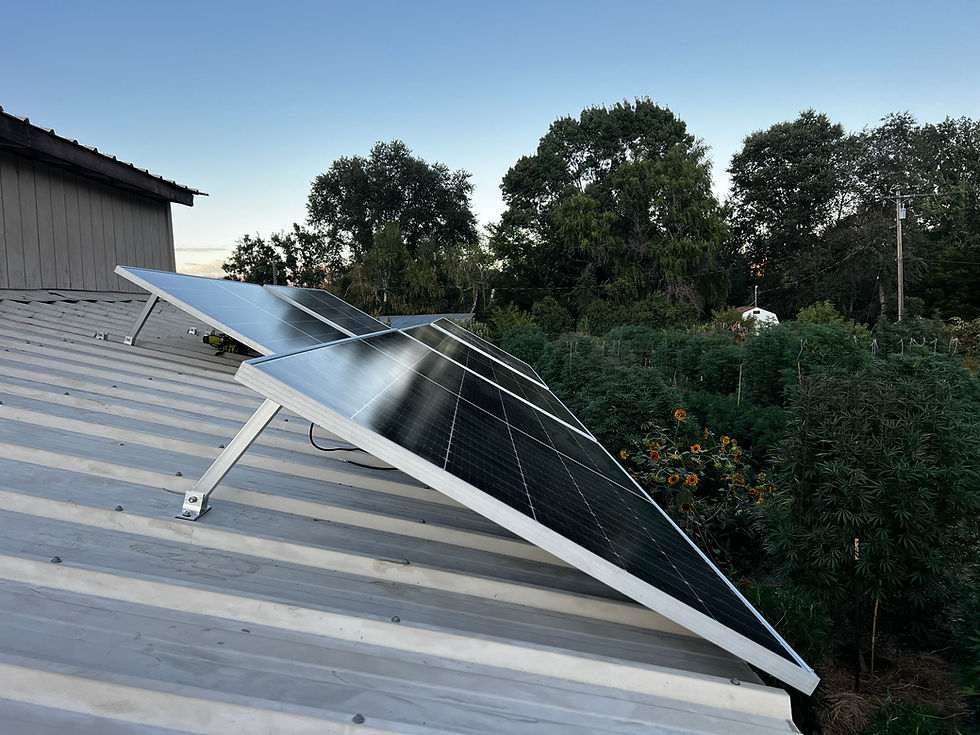
A panel mounted vertically against a balcony railing will have a different production pattern from one tilted toward the sun. Nearby buildings, trees, the balcony above, and the railing itself can all affect how much sunlight reaches it.
The conditions change through the year. A location that looks sunny on a summer afternoon may receive much less direct sun in winter.
Before relying on an advertised annual-production figure, ask what location and mounting arrangement it assumes. The estimate should reflect the actual installation.
What the savings depend on
The useful comparison is between expected solar production and your own electricity use during the same hours.
Hourly usage information, when available, can help show how much power your home uses while the panels would be producing.
Electricity used at home can reduce grid purchases. If production exceeds consumption, surplus electricity may flow to the grid unless the system prevents exports. Do not assume that exported electricity earns a credit or has the same value as electricity used onsite.
Your rate plan and fixed charges also affect the result. Compare the complete cost, including mounting and any necessary electrical work, with a realistic estimate of annual bill savings.
The wiring and mounting
The receptacle, circuit wiring, existing loads, and protective devices all need to suit the selected system.
Adding generation to a circuit can create wiring overloads that the branch-circuit breaker does not detect. The fact that a plug fits an outlet does not establish that the connection is suitable. The certified equipment’s installation instructions matter.
Mounting deserves the same attention. The supporting structure and attachments need to be suitable for the panels and the wind exposure at that location.
A railing supporting a panel’s weight on a calm day does not tell us how the installation will behave in wind. Panels and cables also need to leave required access and emergency exits clear.
What happens during an outage
A basic grid-following plug-in system stops supplying the home’s wiring when utility power fails. Its anti-islanding protection prevents it from continuing to energize the utility grid during an outage.
That protection does not, by itself, prevent exports while the grid is operating. Outage protection and export control do different jobs.
Some systems with storage can power selected devices through designated backup outlets. Supplying the home’s circuits during an outage requires equipment and connections designed for that purpose.
Adding a battery does not automatically provide backup to the house. Start with the equipment you want to keep running and how long you need it to operate.
Questions to ask before buying
A few questions can help establish whether a particular system is a good fit:
Is the complete system certified for plug-in use? An inverter’s certification alone does not establish that the assembled kit is certified. UL’s plug-in solar certification framework uses UL 3700. Verify the exact system and its permitted installation configurations.
What production estimate applies to my location? Ask for an estimate that accounts for the proposed mounting angle, direction, and shading.
What permissions or permits are needed? Check local requirements and, where applicable, lease or association documents. Get any required permissions in writing.
Who handles a problem later? Find out who diagnoses equipment issues, handles warranty claims, and pays for any replacement labor.
Considering balcony solar?
If you are considering a system, send me your project city, the equipment model or product link, and a few photos of the proposed location and nearby receptacle.
Let me know whether your goal is daytime savings, limited backup, or both. I’ll help you work through the options and next steps.
Gelfer Electrical Services Licensed California C-10 Electrical Contractor · CSLB #1159194
Serving San Francisco and the Bay Area. Selected Mendocino County solar and off-grid projects considered by arrangement.
Comments